
Fixed Asset Tagging
Tags that outlast the asset they identify.
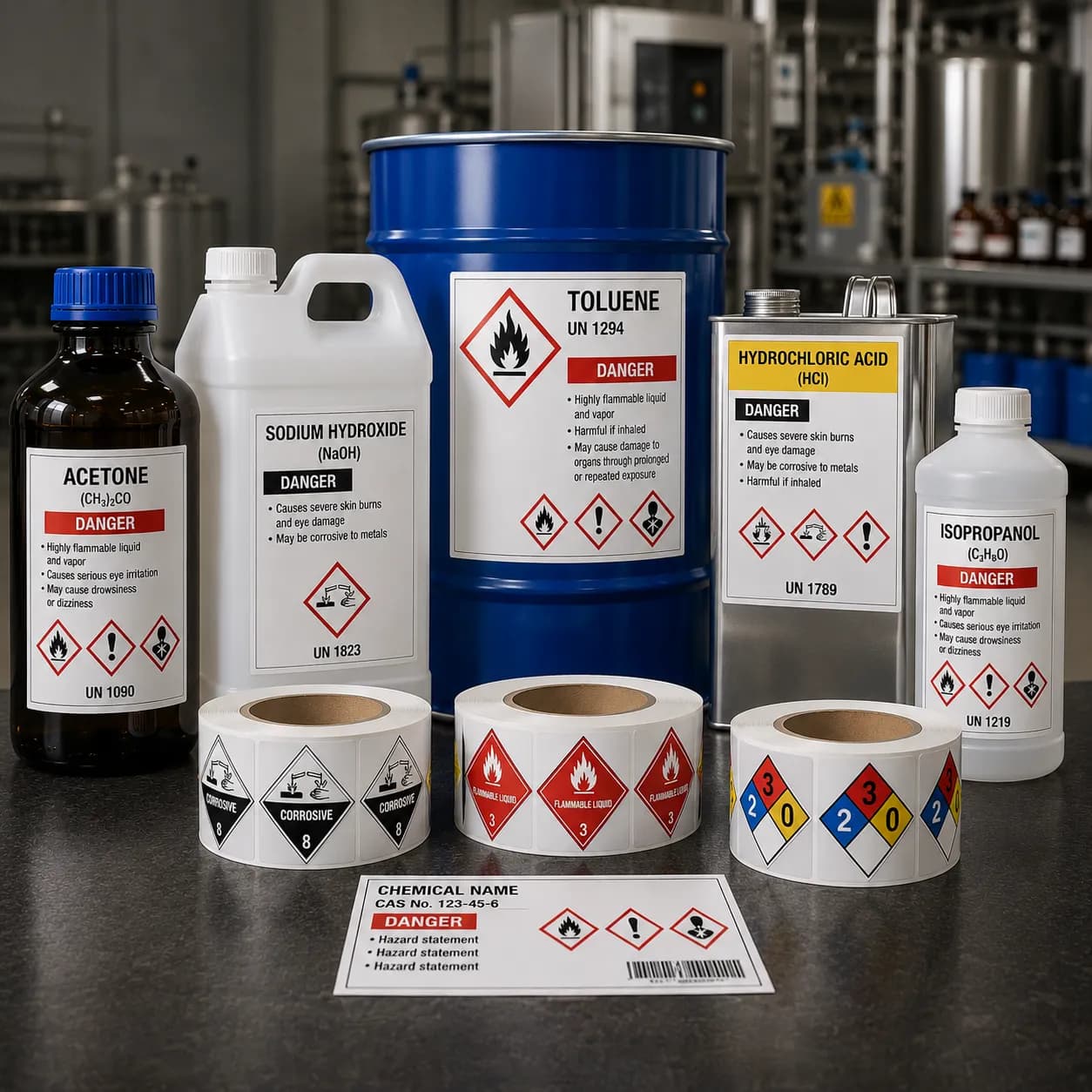
Marking that survives solvents, abrasion, and outdoor storage.
Hazard marking is the one label that must never become unreadable, and it lives in the harshest place any label goes: outdoors, wiped down with solvent, and dragged across a yard.
Paper facestock and wax ribbon do not survive that combination. Synthetic stock with full resin print does, and the difference in cost per drum is small next to the consequence of an unlabelled container.
The order matters. Each step removes a decision that would otherwise be made by guesswork further down the line.
Match facestock to the container material and the chemicals present
Use full resin ribbon, since wax and wax resin will not hold
Size the label so required information stays legible at arm's length
Test a sample against a wipe-down with your actual solvents
The stock and equipment this application usually calls for. Each link opens the catalog filtered to that family.
Tags that outlast the asset they identify.
Due dates visible on the instrument, not buried in a spreadsheet.
Follow a lot from raw material through to the customer who received it.