
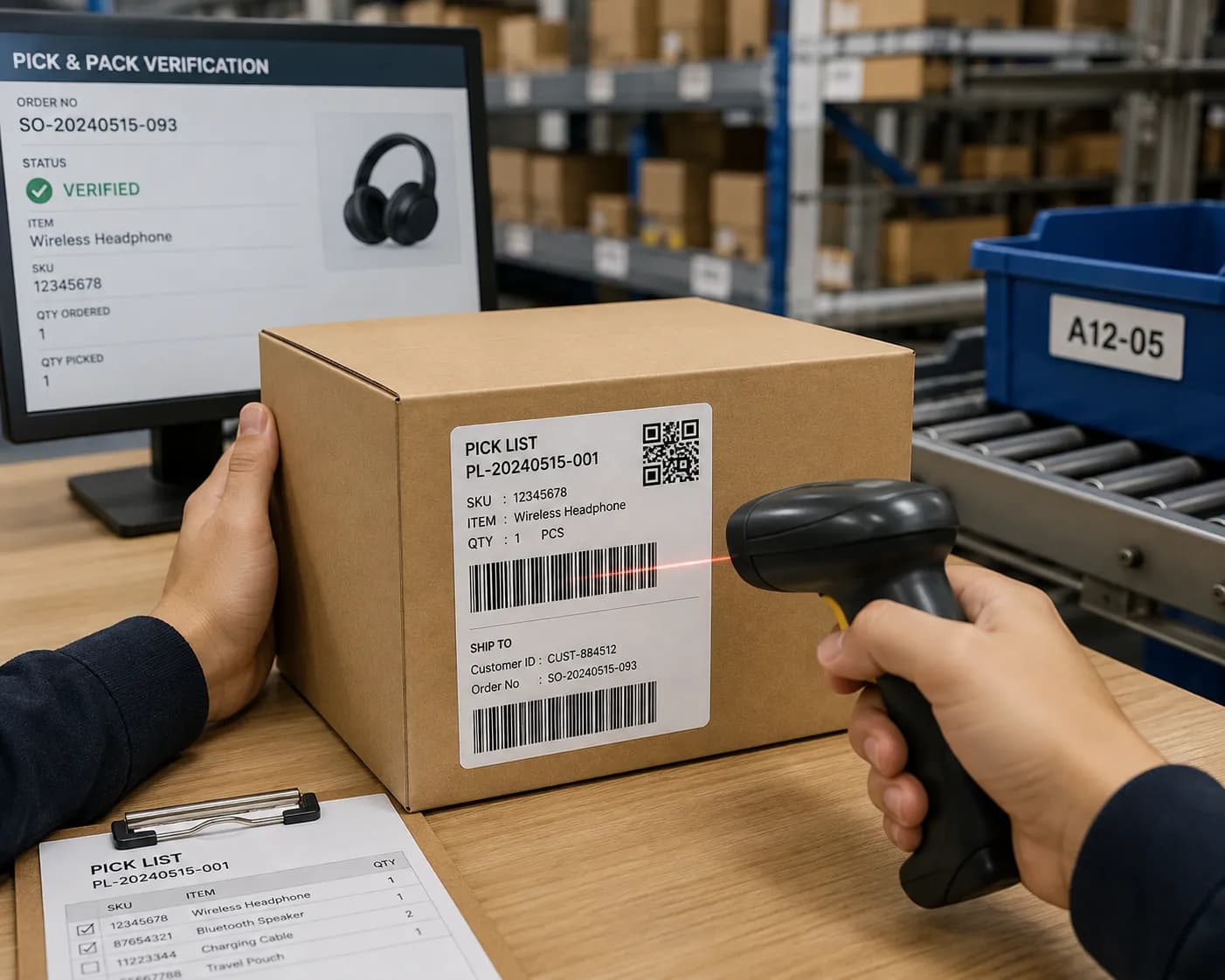
Pick & Pack Verification
Scan-to-confirm at the bench, before the carton is sealed.
14 applications grouped by the industry they serve. A label fails for reasons decided long before it is printed: the surface it goes on, the temperature it meets, and how long it has to stay readable, and those tend to run in families by industry.
Warehouses, couriers, and fulfilment centres where a label has to survive handling, scan on the first pass, and keep a shipment traceable from dock to doorstep.
Scan-to-confirm at the bench, before the carton is sealed.
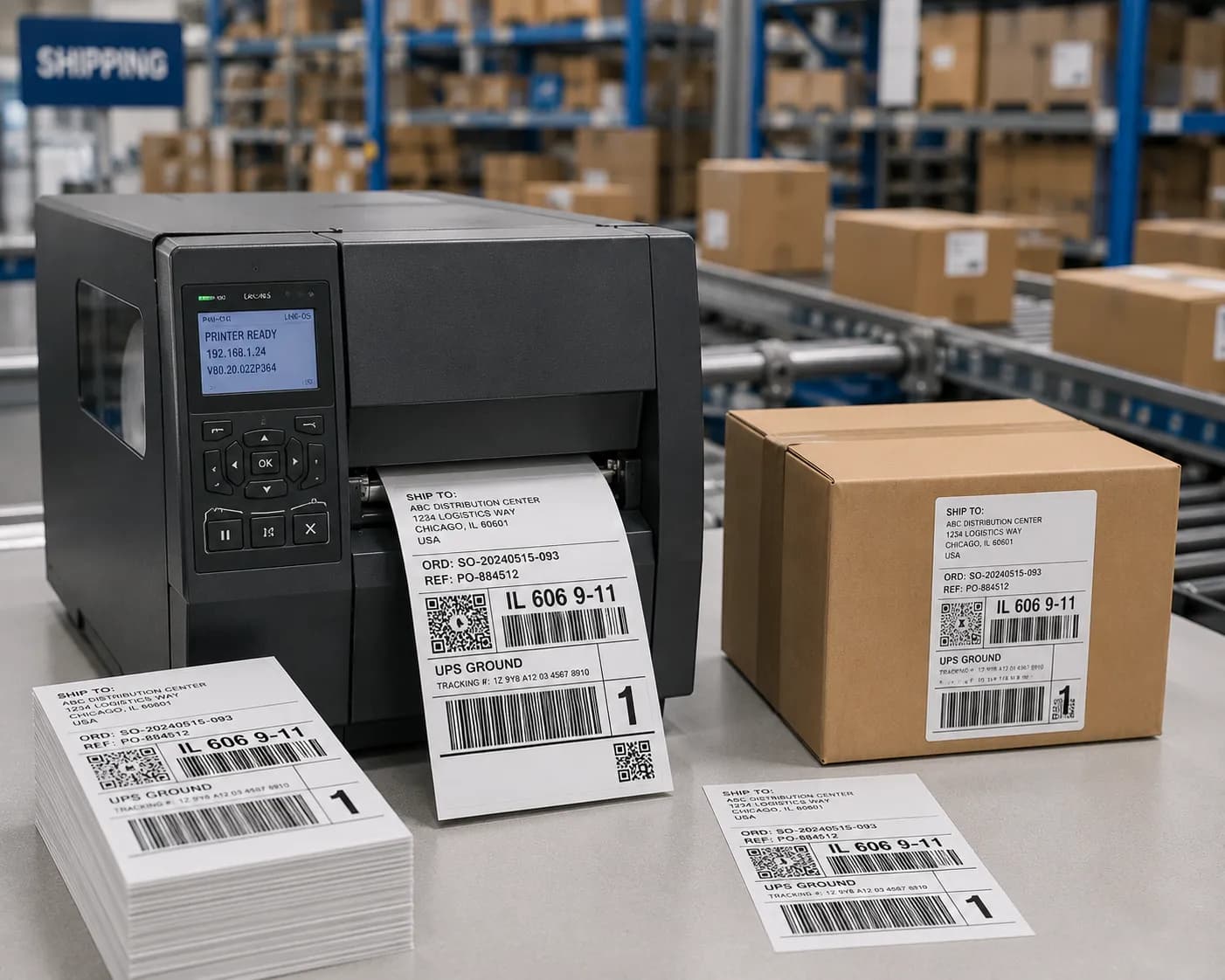
Fewer roll changes and fewer stoppages at the dispatch bench.
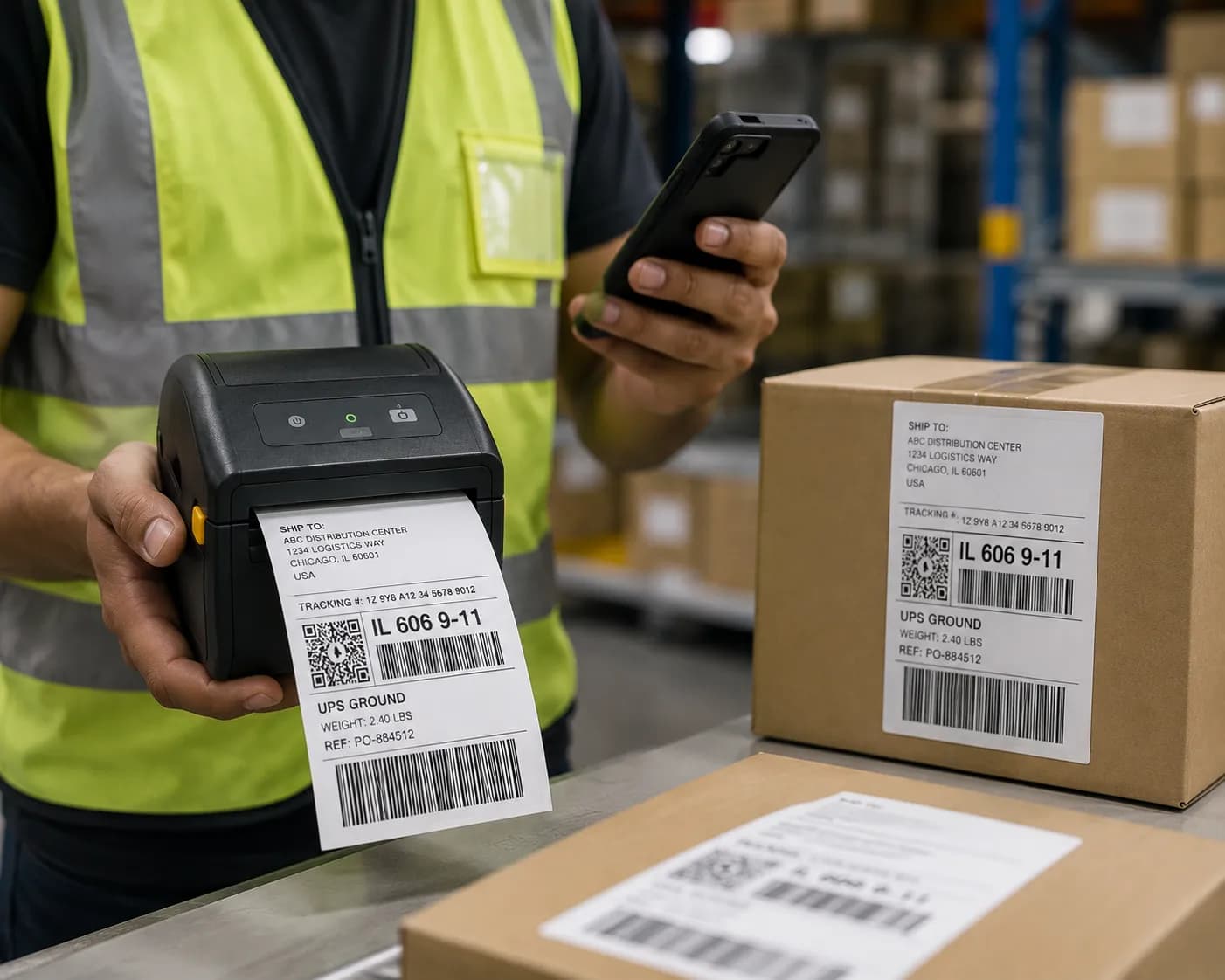
Print where the work happens instead of walking to a shared printer.
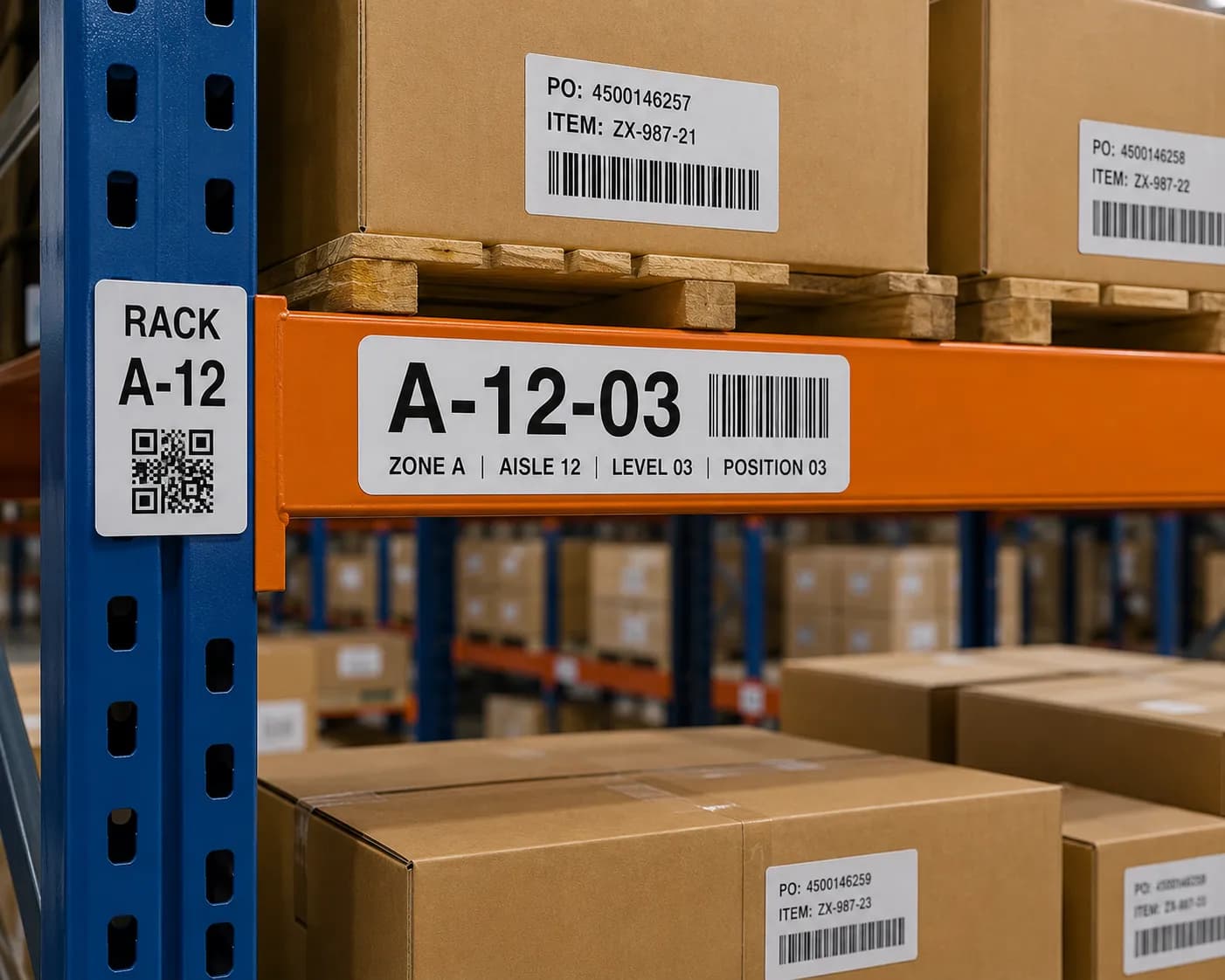
Rack and bin marking that reads from the aisle and from a forklift.
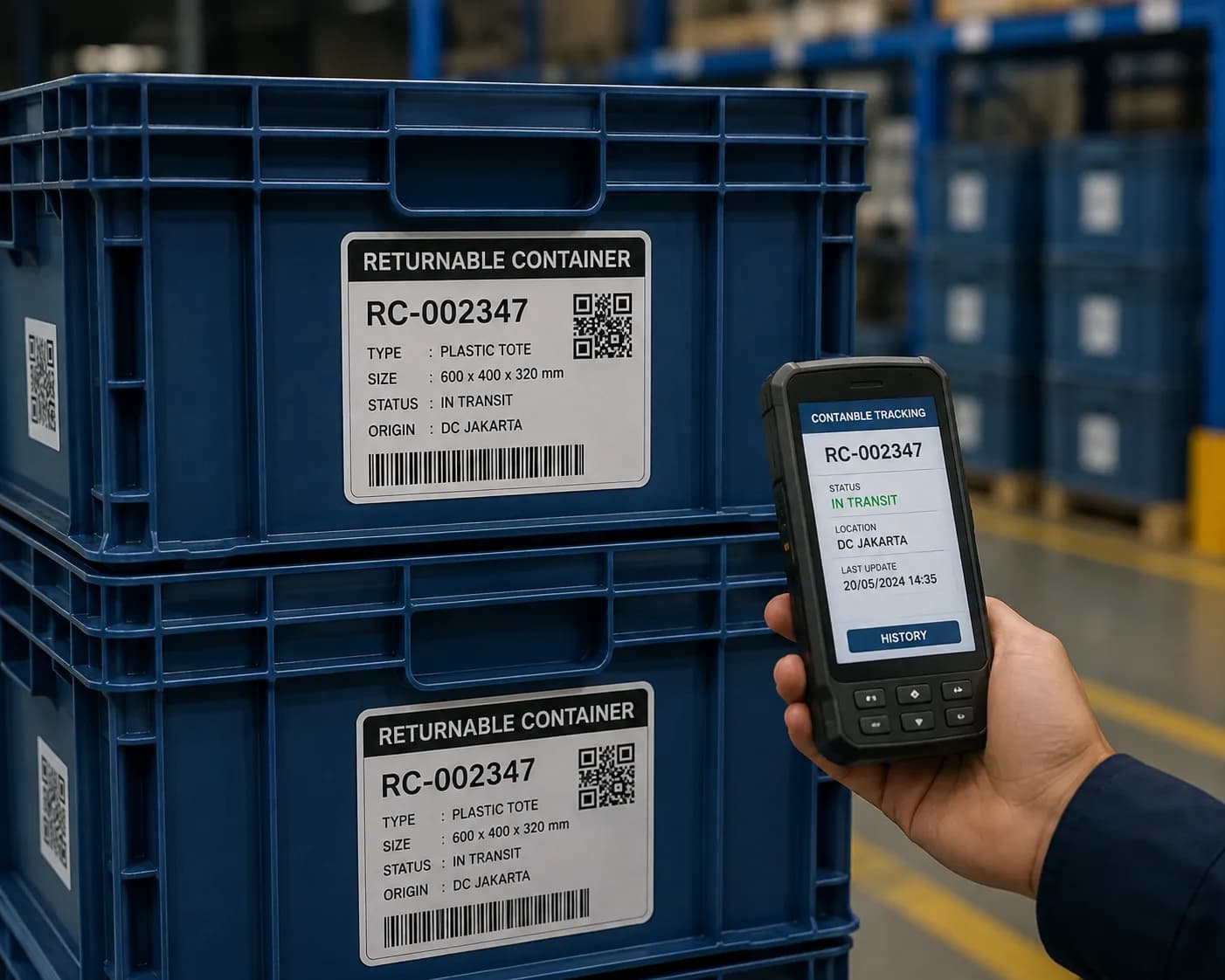
Follow crates, totes, and pallets through every cycle back.
Packaged goods and shop floors where the same barcode has to carry a price, a use-by date, and a scan-ready code without slowing the line.
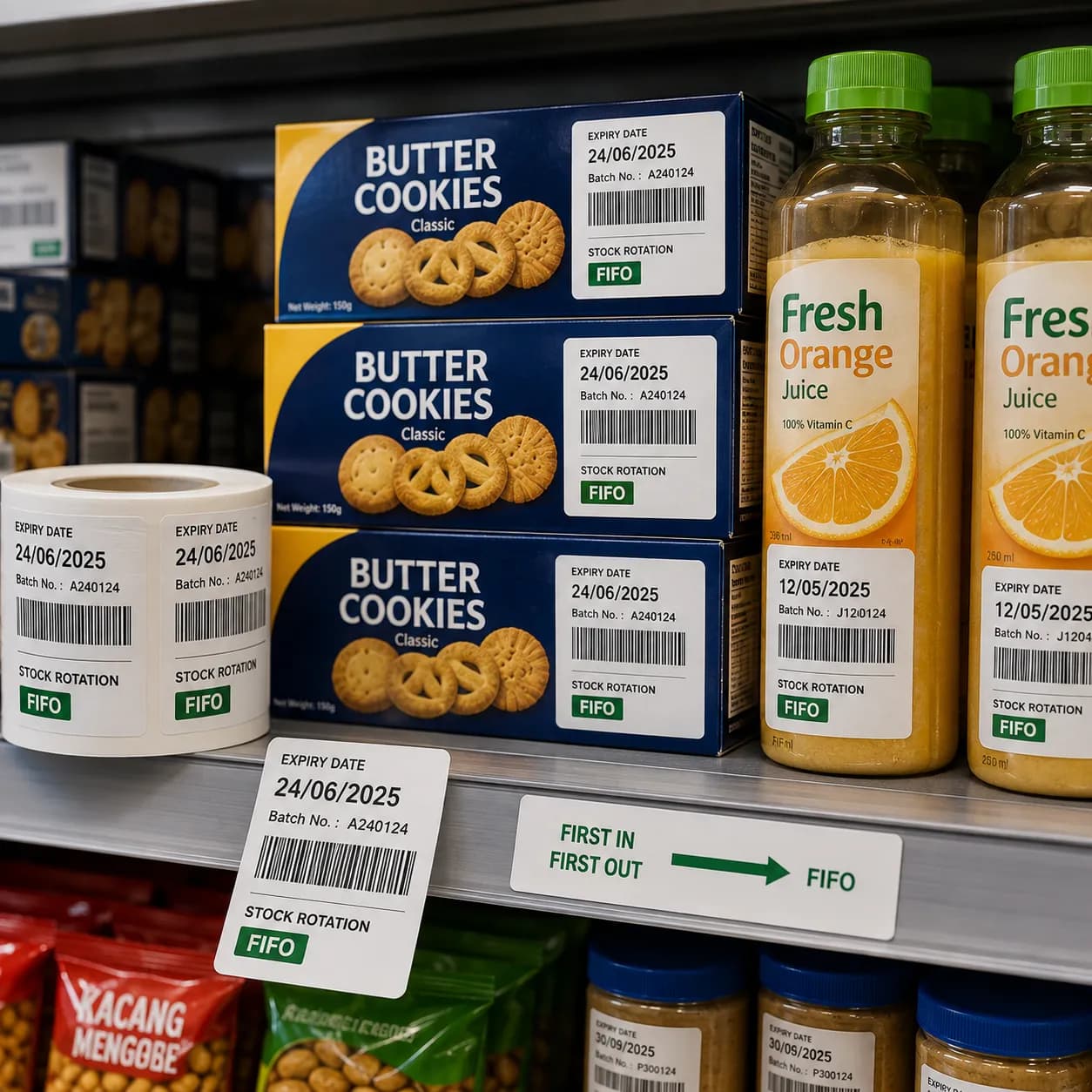
Printed prep and use-by dates instead of handwritten tape.
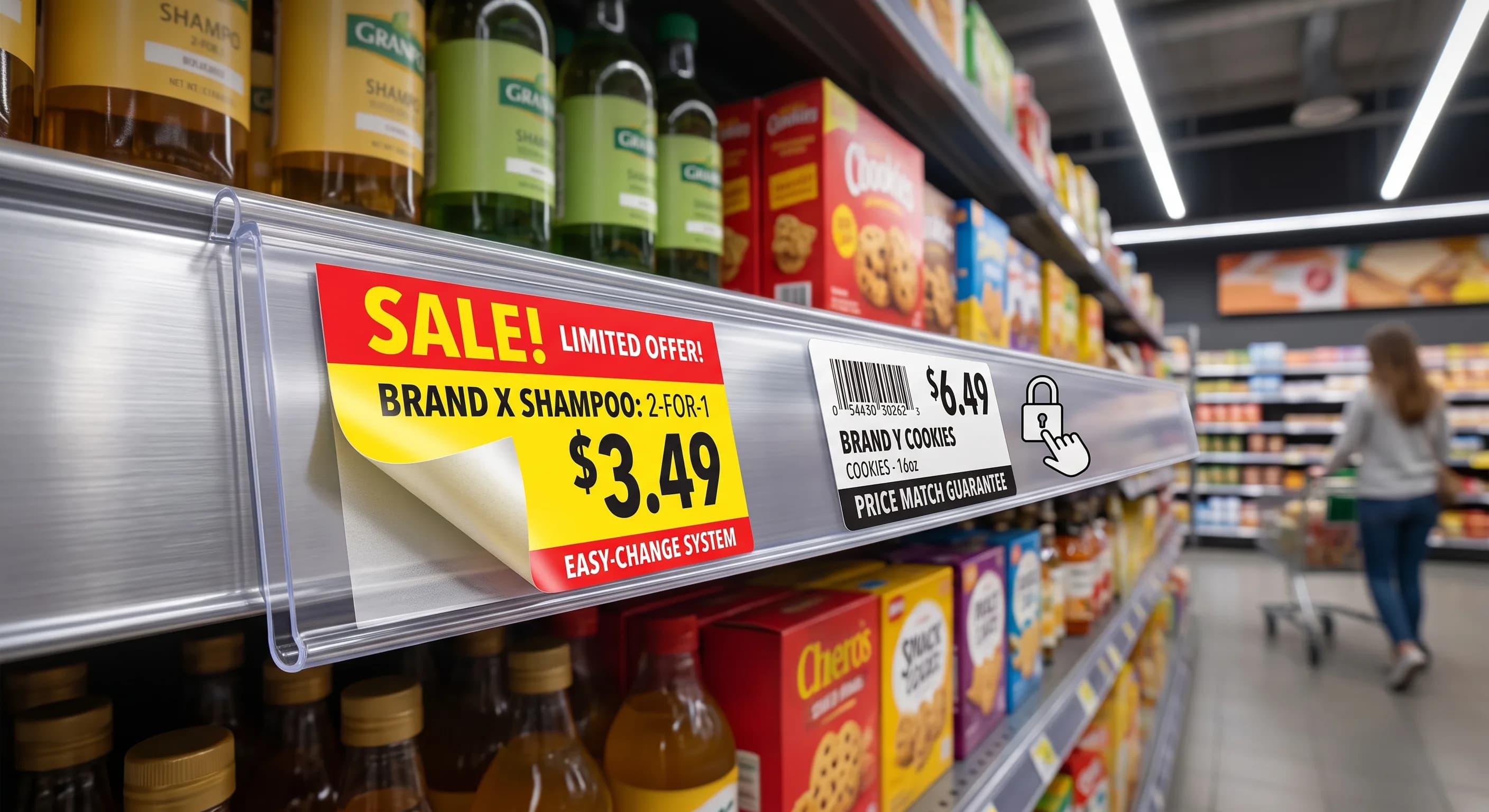
Promotional tickets that peel clean and product labels that stay put.
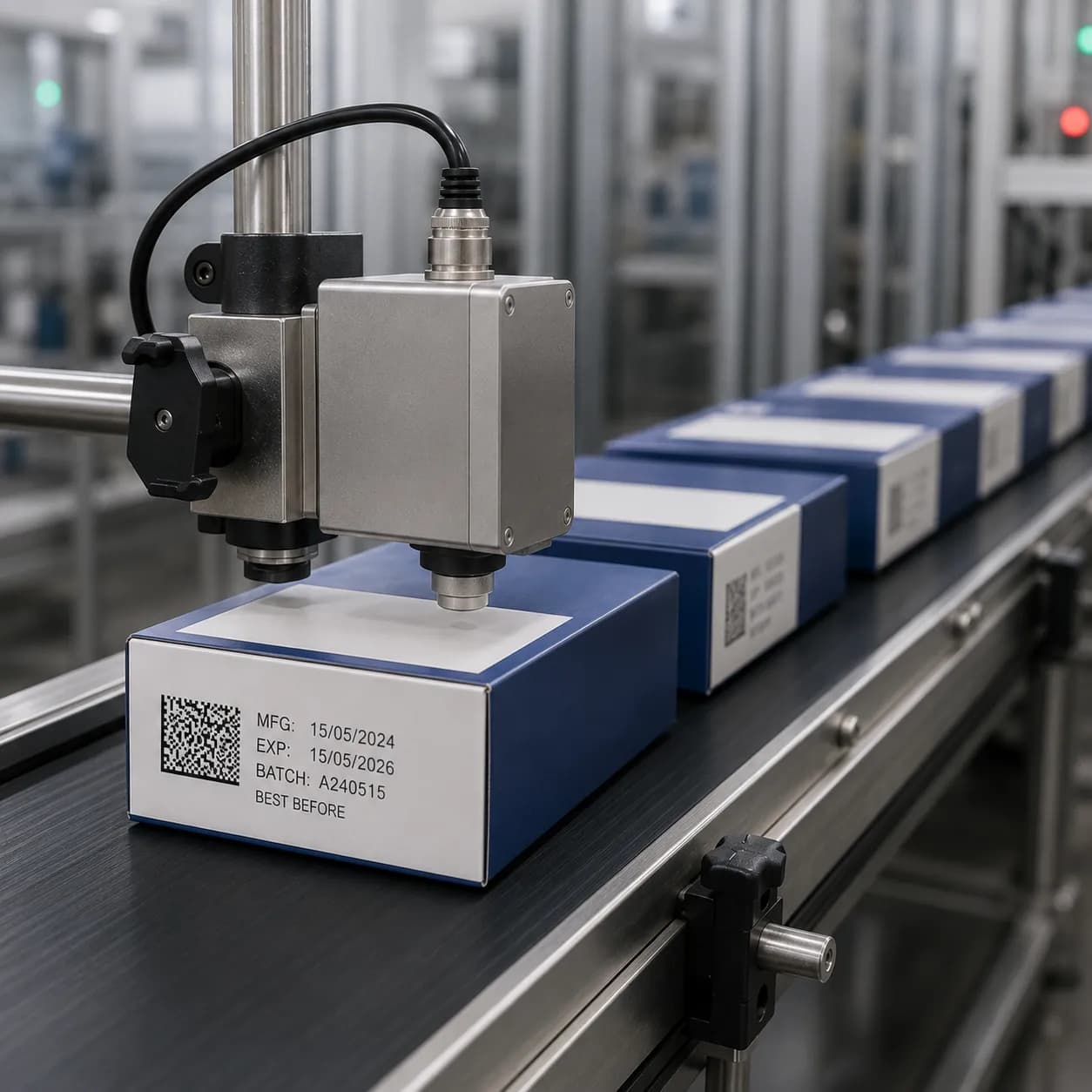
Print and apply at line speed without becoming the bottleneck.
Plants and workshops where a label has to survive oil, heat, and abrasion long enough to outlast the asset, tool, or chemical it identifies.
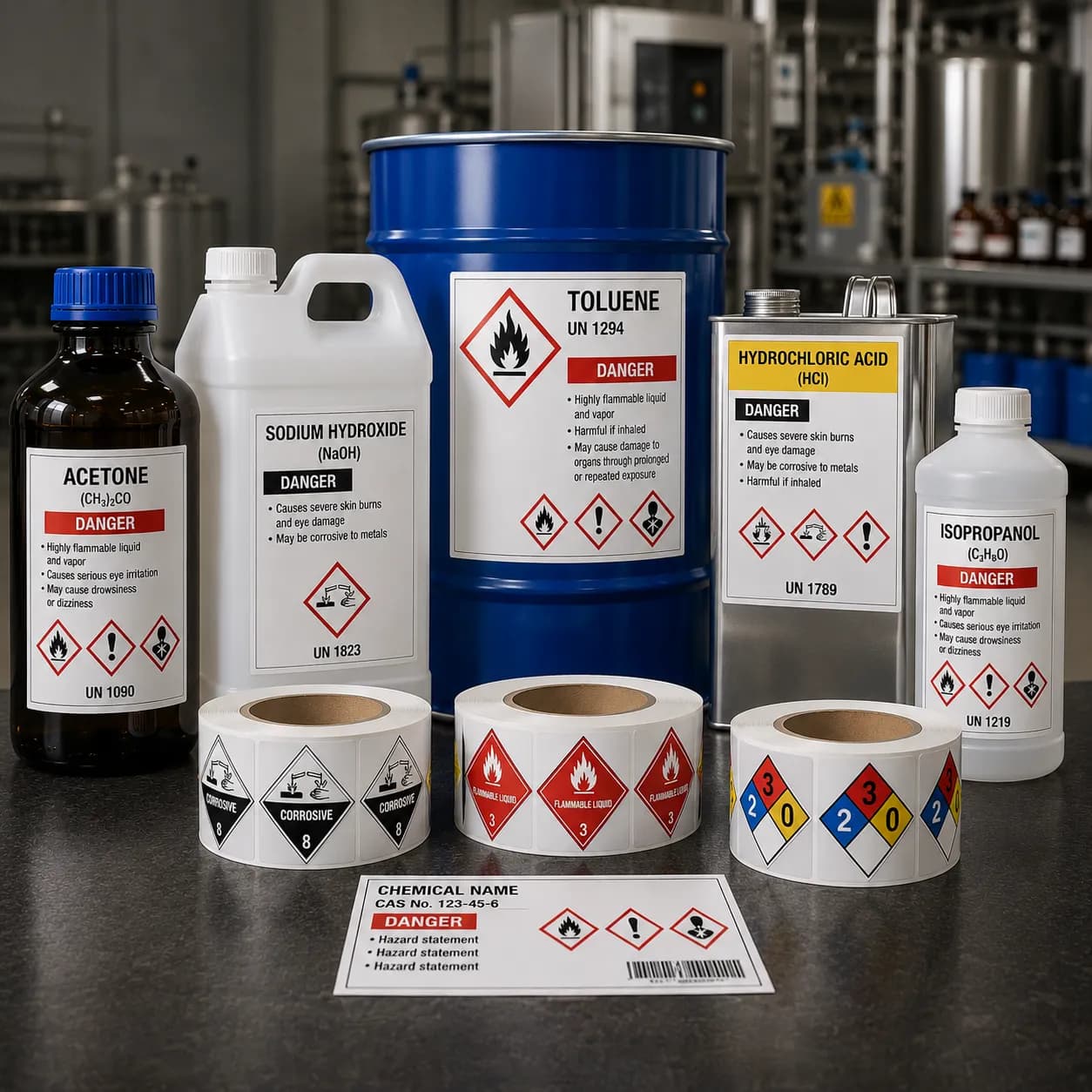
Marking that survives solvents, abrasion, and outdoor storage.
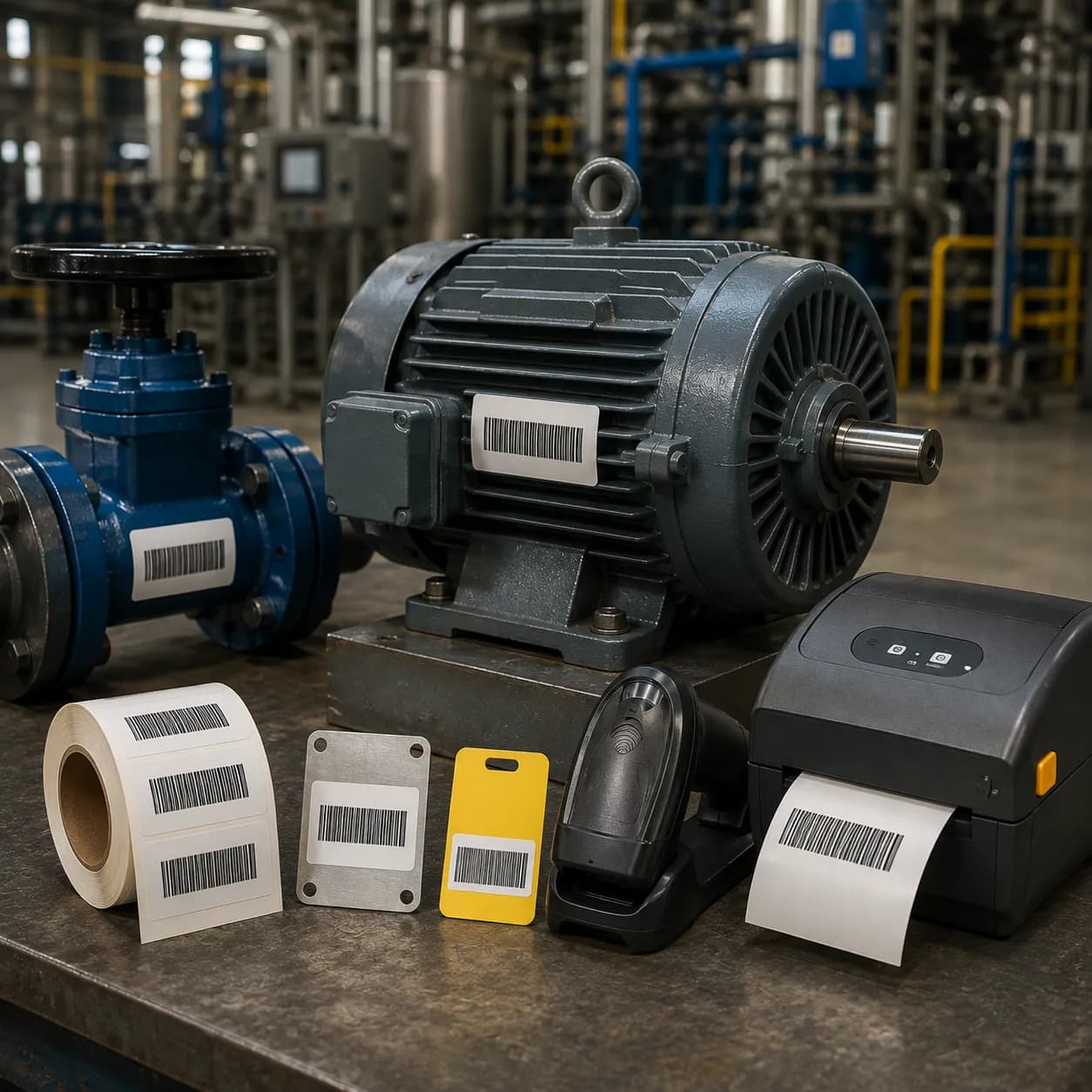
Tags that outlast the asset they identify.
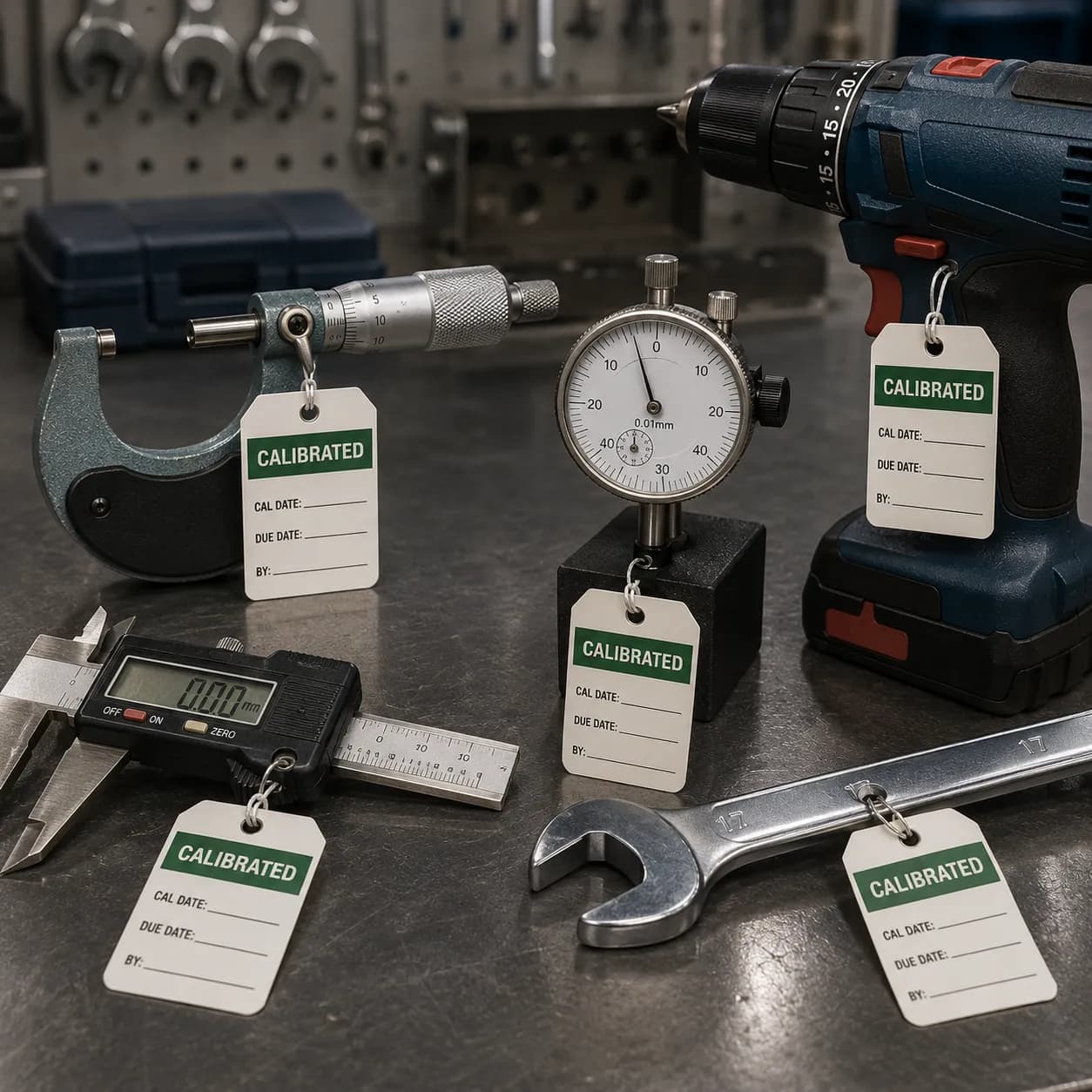
Due dates visible on the instrument, not buried in a spreadsheet.
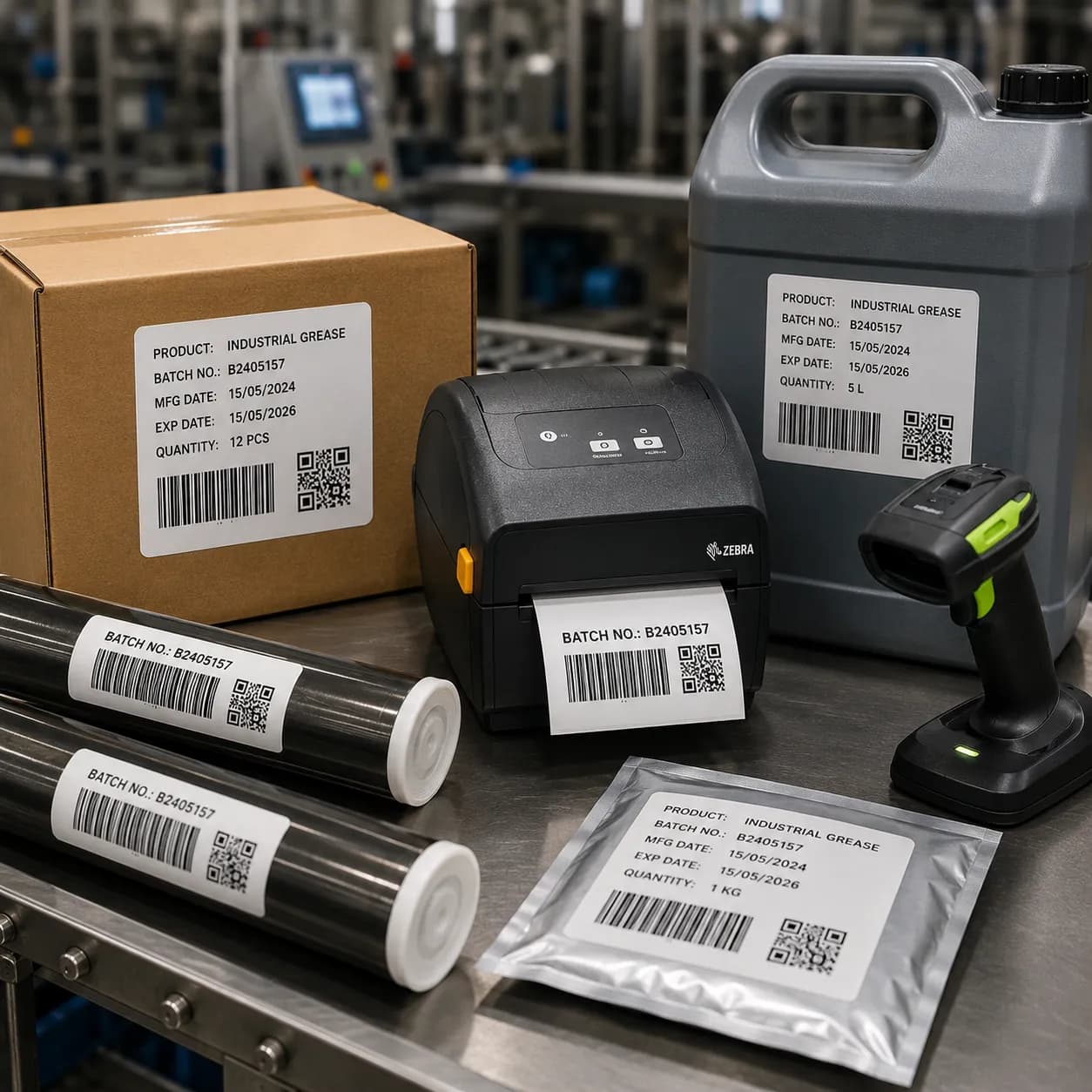
Follow a lot from raw material through to the customer who received it.
Hospitals, laboratories, and cold chains where a mislabelled sample or a code that fails after refrigeration is never a minor error.
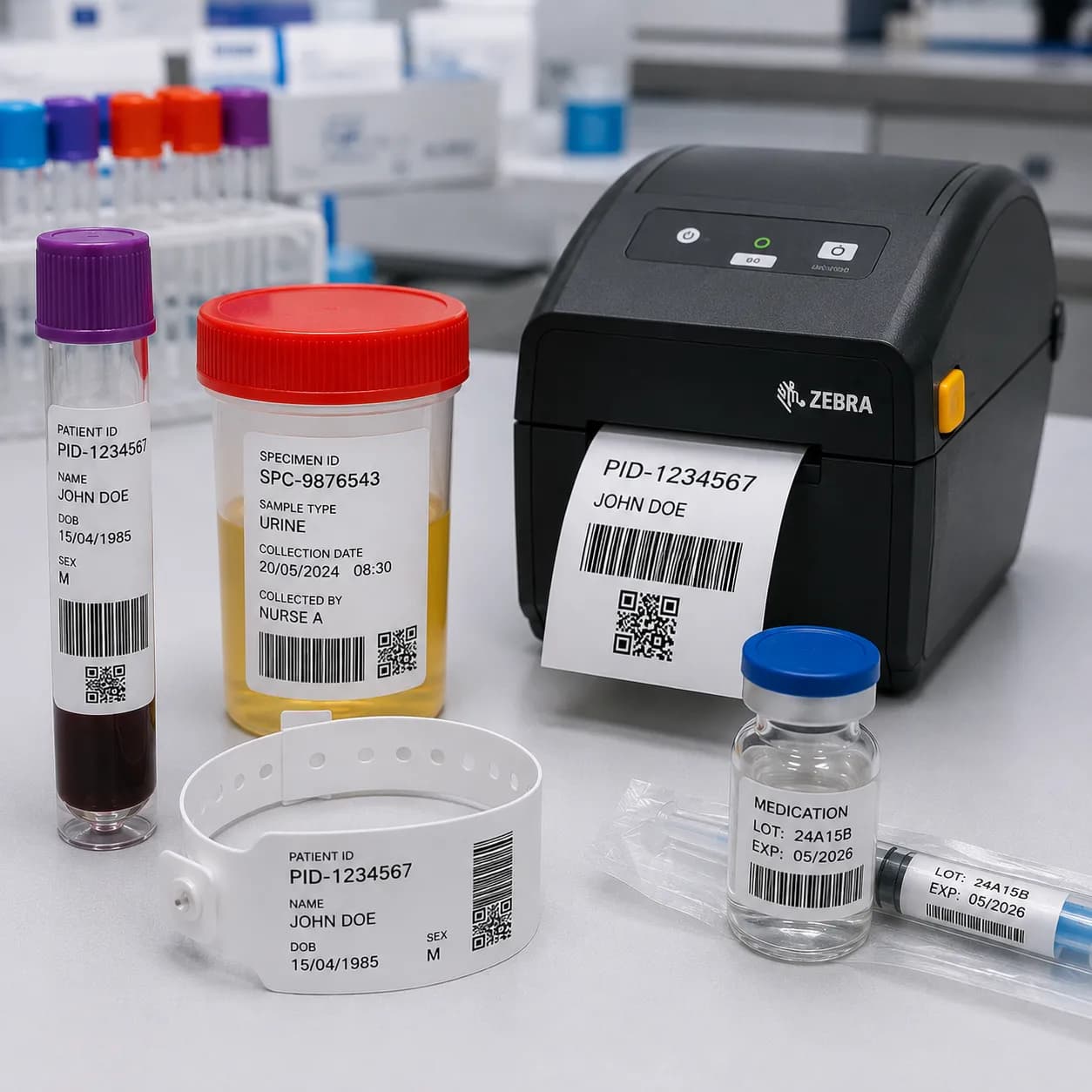
Codes that still scan after refrigeration and handling.
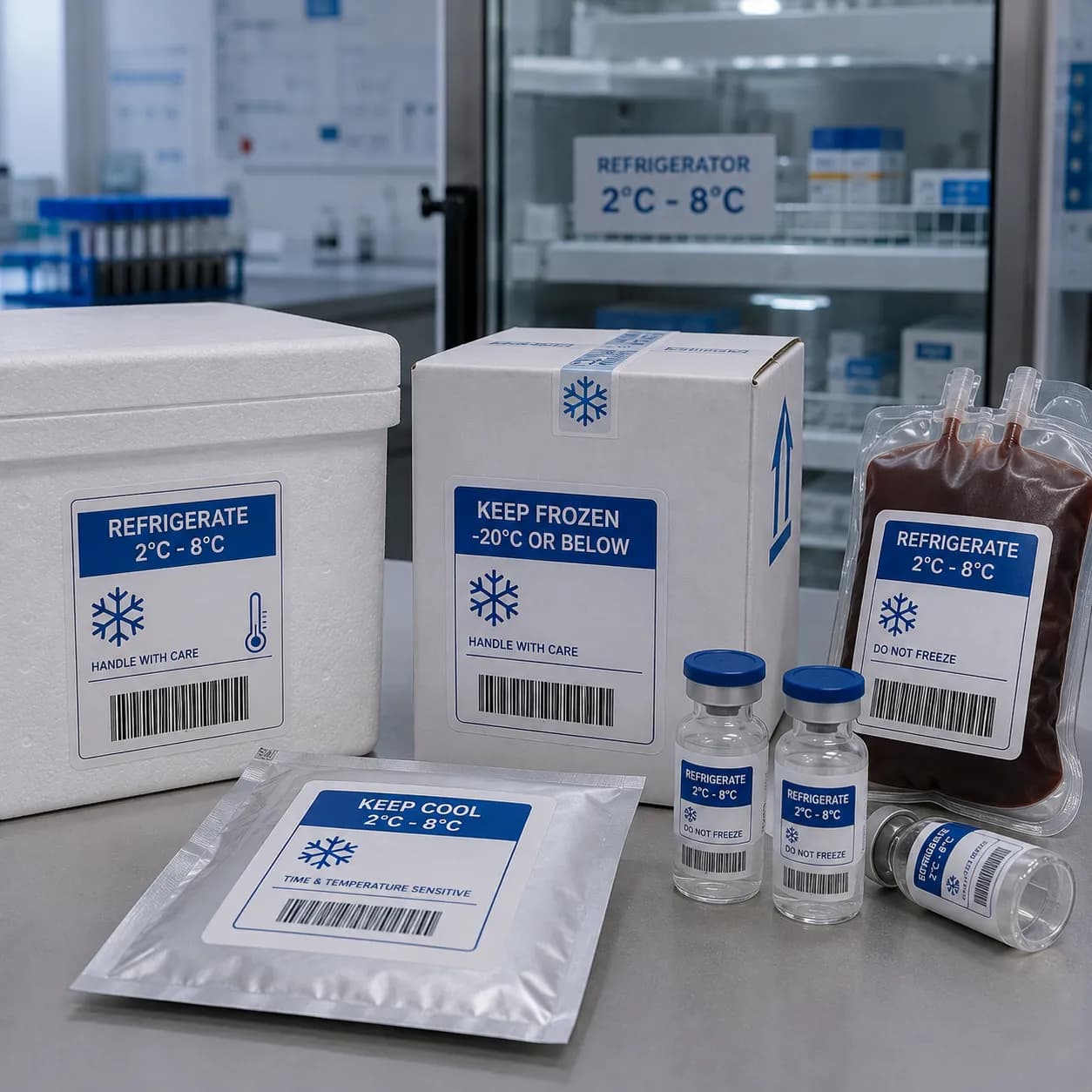
Labels that bond cold and stay readable through temperature cycling.
Four stages from first conversation to graded output. Each one ends with something in your hands, not a status update.
Step 1
We start with the surface, the conditions, and how long the label has to stay readable. Those three answers decide the facestock and adhesive, and they are the questions most often skipped.
You receiveA written specification you can quote against
Step 2
Printing and die-cutting to that specification at our Tambun Selatan plant, wound to the core size and direction your applicator takes.
You receiveSample roll first, then the production run
Step 3
Printers and scanners specified around your throughput rather than a feature list, configured against the media they will actually run.
You receiveWorking equipment, matched consumables
Step 4
Finished output is checked with barcode verification equipment, which grades print quality rather than simply confirming that one scanner could read one code.
You receiveGraded results retained with the job record
If none of the above matches exactly, tell us the surface, the conditions, and the volume. We will come back with a specification and a sample before you commit to a production run.