
Patient & Specimen Identification
Codes that still scan after refrigeration and handling.
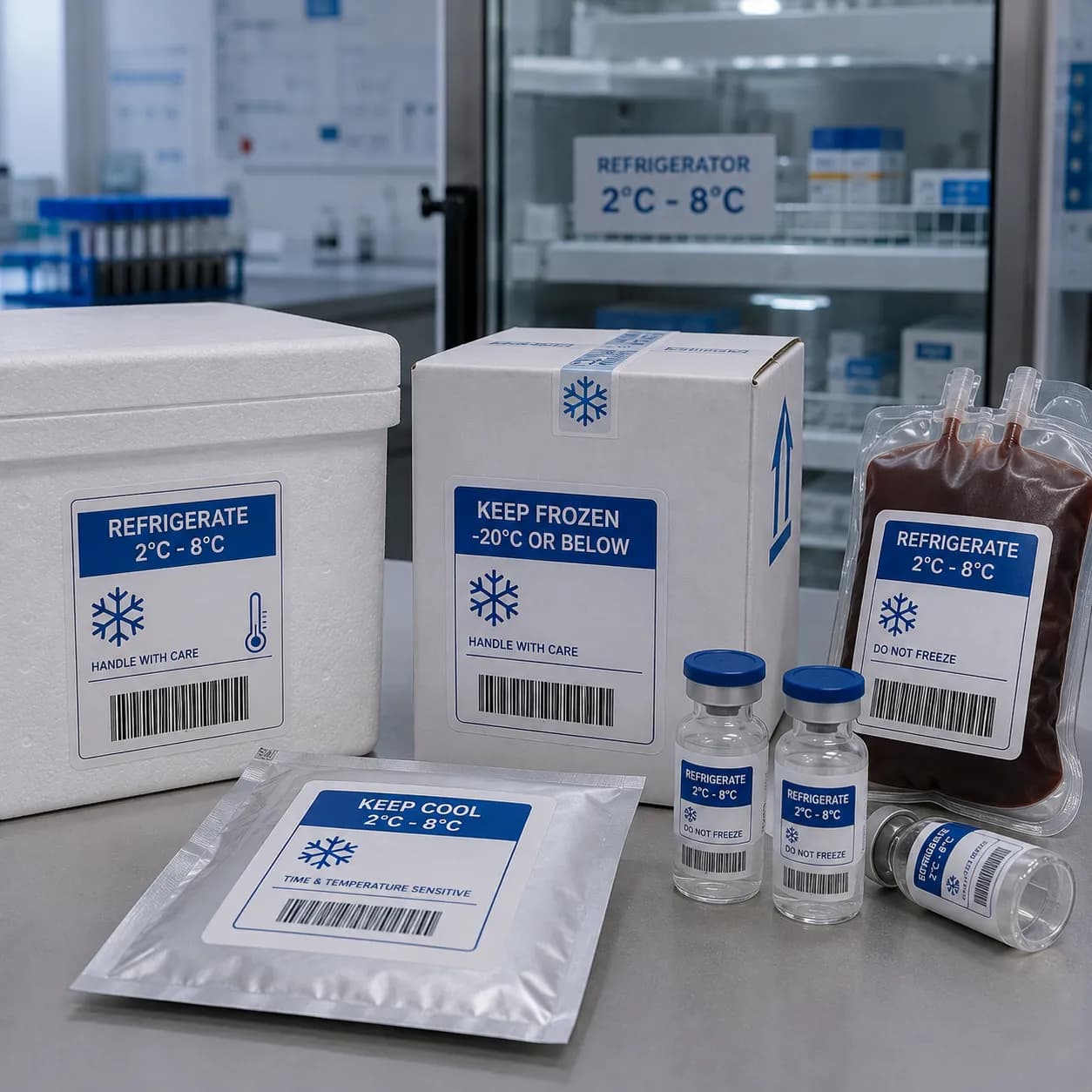
Labels that bond cold and stay readable through temperature cycling.
Cold storage defeats labels in two separate ways, and the fix for one is not the fix for the other. A standard adhesive applied to an already frozen carton never bonds properly and lets go within hours. Separately, product moving between cold and ambient collects condensation, which paper facestock absorbs until the print distorts.
Specifying for cold means answering both: the application temperature decides the adhesive, and the humidity decides the facestock.
The order matters. Each step removes a decision that would otherwise be made by guesswork further down the line.
State the application temperature, not just the storage temperature
Use synthetic facestock wherever condensation is expected
Apply before the product enters cold storage where the process allows
Test on the actual carton surface, not a flat sample board
The stock and equipment this application usually calls for. Each link opens the catalog filtered to that family.
Codes that still scan after refrigeration and handling.