
Cold Chain Labelling
Labels that bond cold and stay readable through temperature cycling.
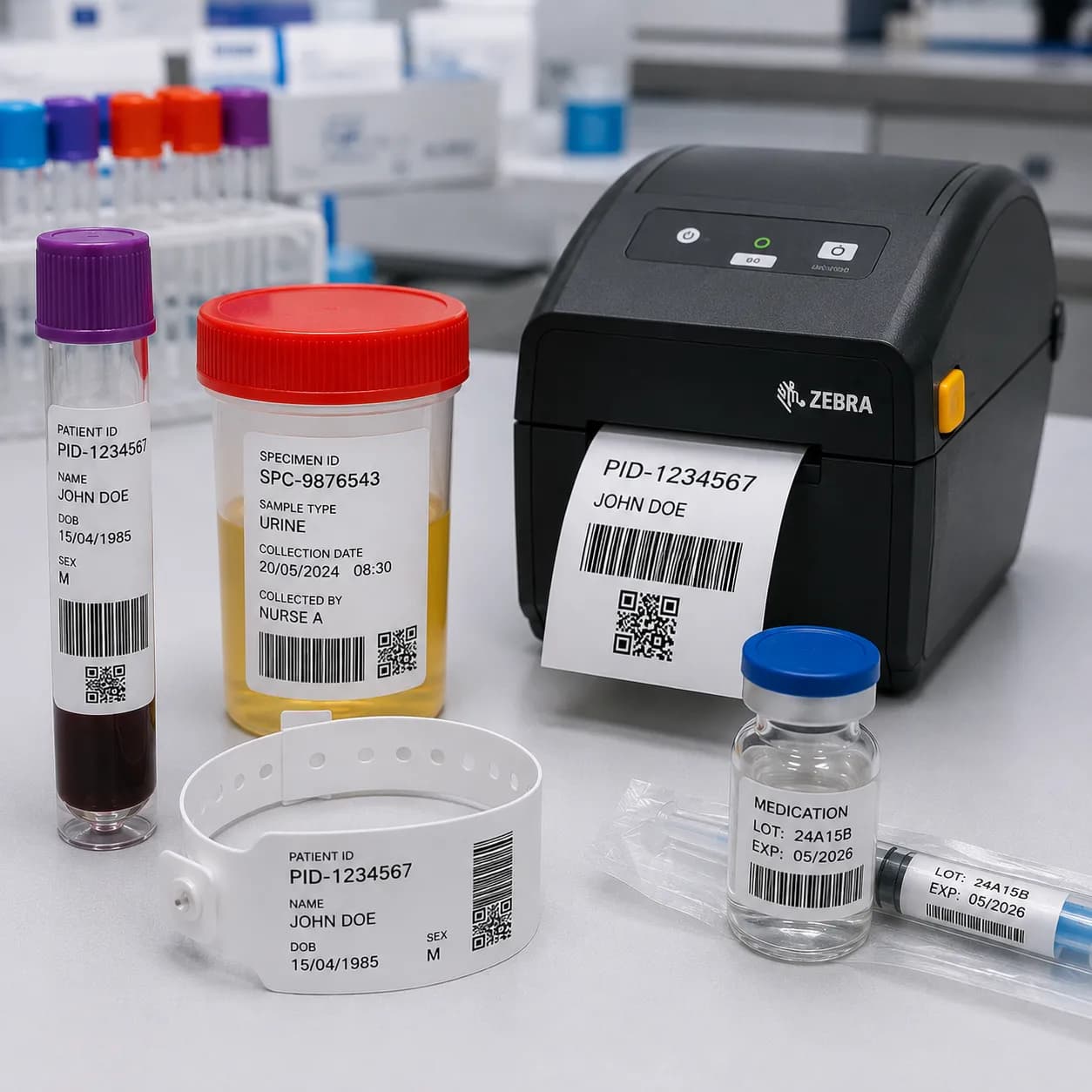
Codes that still scan after refrigeration and handling.
Clinical labels face a combination almost nothing else does: a curved surface barely wider than a finger, repeated temperature cycling, and contact with alcohol. Paper facestock swells, the print distorts, and the label lifts at the edge.
A misread specimen label is not a productivity problem. Specifying synthetic stock with a resin ribbon removes an entire class of failure for a marginal cost per label.
The order matters. Each step removes a decision that would otherwise be made by guesswork further down the line.
Match adhesive to the container diameter and application temperature
Use synthetic facestock wherever condensation is likely
Pair with a resin ribbon, since wax will not hold on synthetics
Verify print quality on the actual tube, not a flat sample
The stock and equipment this application usually calls for. Each link opens the catalog filtered to that family.
Labels that bond cold and stay readable through temperature cycling.