
Shelf Edge & Price Marking
Promotional tickets that peel clean and product labels that stay put.
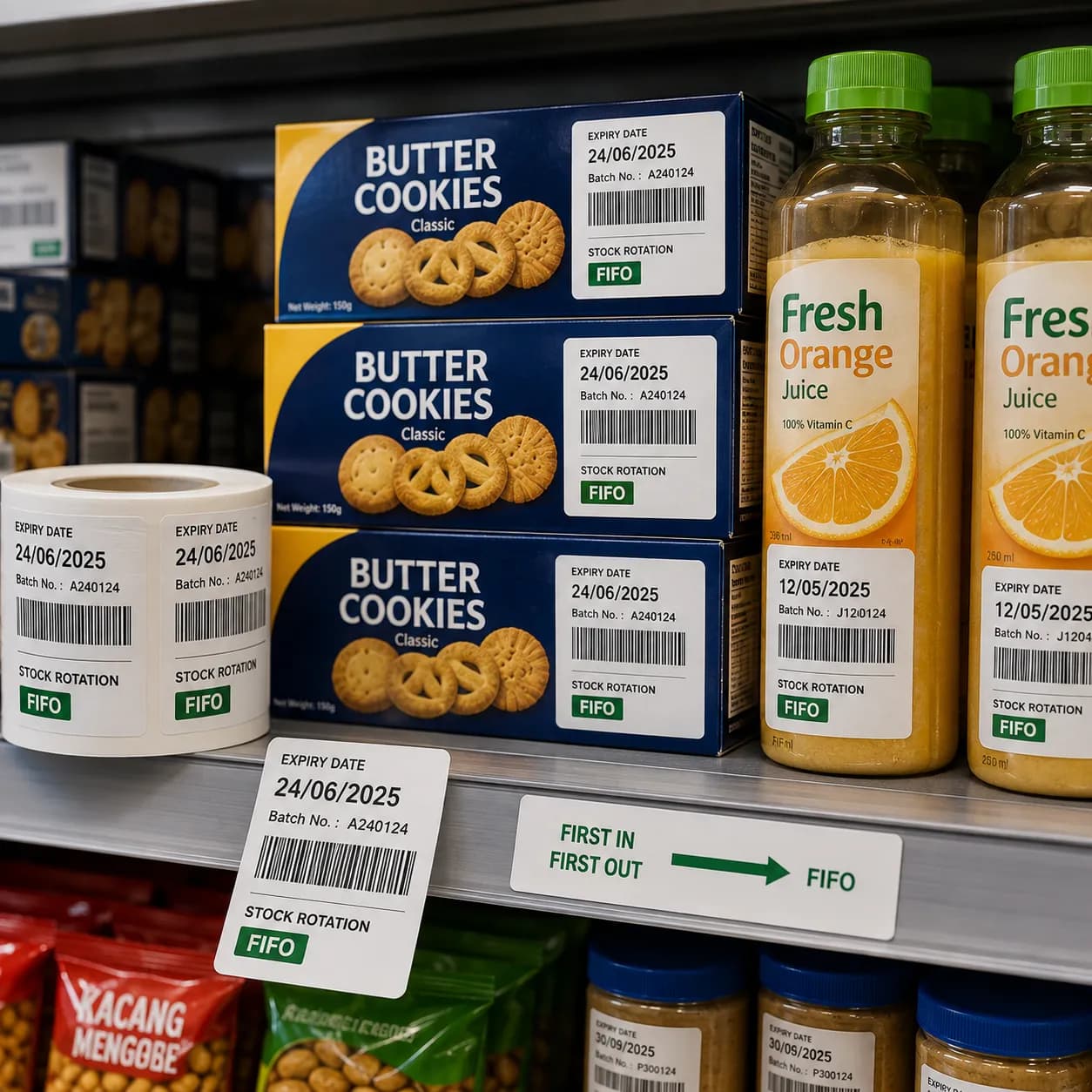
Printed prep and use-by dates instead of handwritten tape.
Handwritten date labels fail in three ways at once. They are slow to write during service, they smudge in a chiller, and every member of staff formats them slightly differently. The result is stock discarded early because nobody could read it, or used late because someone guessed.
Printed labels remove the guesswork. The same field appears in the same place every time, legible after a night in the cold.
The order matters. Each step removes a decision that would otherwise be made by guesswork further down the line.
Agree the label format: item, prepared date, use-by, and station
Set the printer to calculate use-by from the prep date
Print on facestock and adhesive rated for chilled storage
Reorder rolls on a standing schedule so stations never run dry
The stock and equipment this application usually calls for. Each link opens the catalog filtered to that family.
Promotional tickets that peel clean and product labels that stay put.
Print and apply at line speed without becoming the bottleneck.