
Expiry Date & Stock Rotation Labelling
Printed prep and use-by dates instead of handwritten tape.
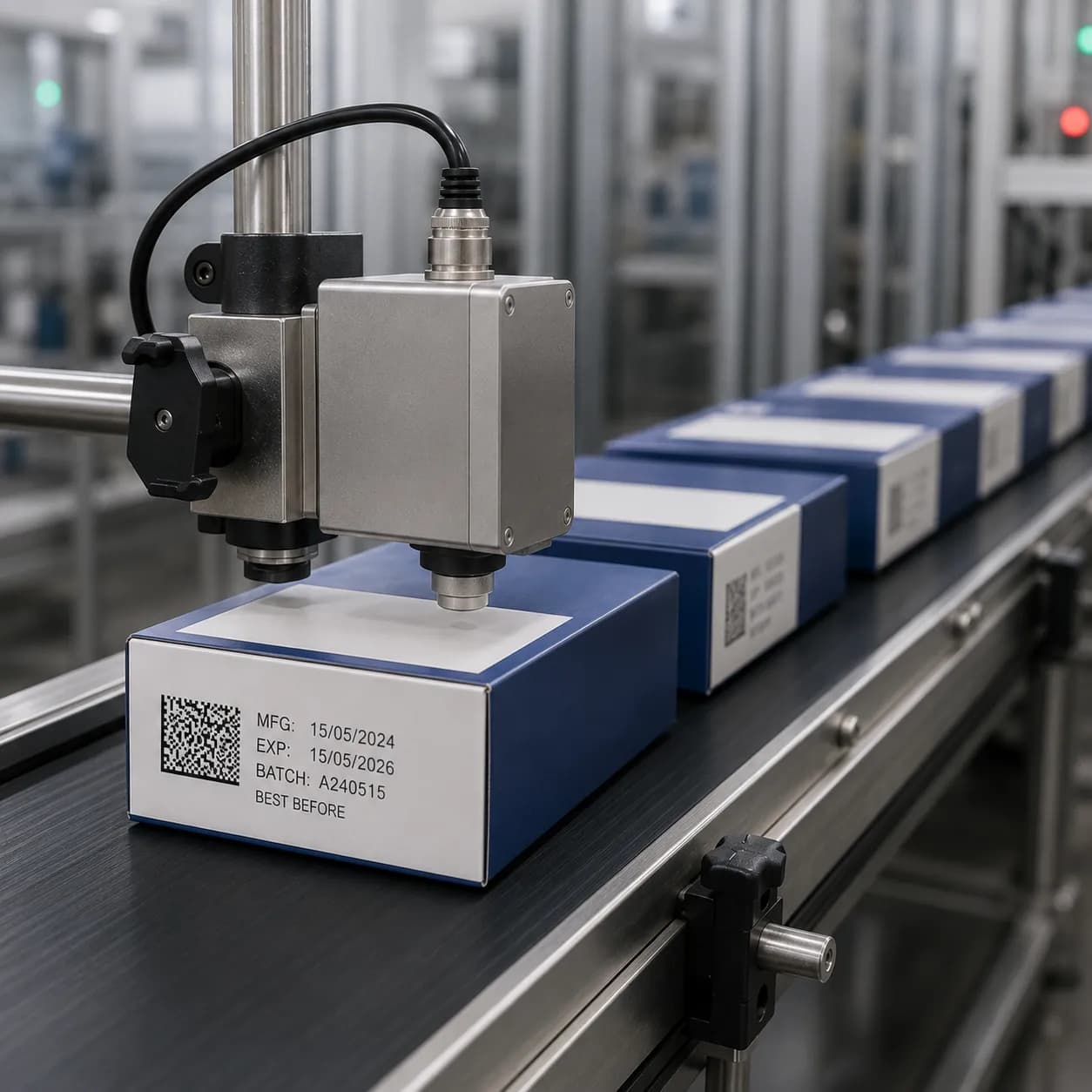
Print and apply at line speed without becoming the bottleneck.
A labelling station that cannot keep up sets the pace for everything upstream of it. The usual cause is not the printer's rated speed but a mismatch: media the applicator does not feed cleanly, or a die-cut tolerance that drifts part way through a roll.
Getting the label, the liner, and the machine specified together is what keeps the station invisible, which is what a good one should be.
The order matters. Each step removes a decision that would otherwise be made by guesswork further down the line.
Specify die-cut tolerance and gap to suit the applicator sensor
Confirm core size, outer diameter, and wind direction together
Run a first-article check across a full roll, not a short sample
Hold tooling for repeat profiles so reorders skip the lead time
The stock and equipment this application usually calls for. Each link opens the catalog filtered to that family.
Printed prep and use-by dates instead of handwritten tape.
Promotional tickets that peel clean and product labels that stay put.